

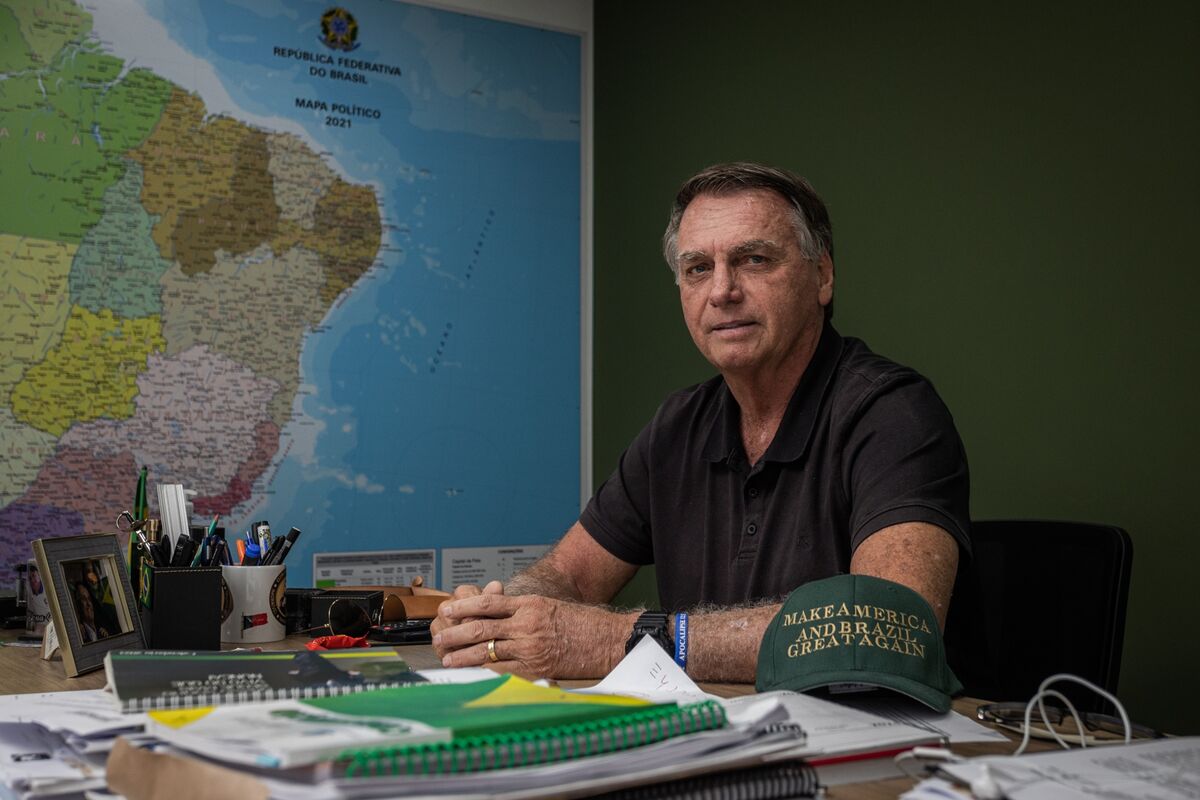
Former U.S. President Donald Trump has come forward to defend Brazil’s ex-leader Jair Bolsonaro, denouncing the legal proceedings against him as a politically motivated “witch hunt.” Trump’s remarks, shared via social media and subsequent public appearances, have sparked international debate about the intersection of politics, justice, and democracy in both Brazil and the United States.
The remarks were made while Bolsonaro, the ex-right-wing leader of Brazil, is confronting increasing legal challenges in his homeland. Probes into his involvement in the January 8, 2023, incidents at Brazil’s Congress, Supreme Court, and presidential palace—widely regarded as an attempted insurgency—have resulted in more legal investigations. Brazilian officials are investigating whether Bolsonaro, who was not in the country during the incidents, contributed to the provocation or lacked actions to stop the violent rebellion initiated by his followers after he lost the election.
Trump, famous for his strong political ties with Bolsonaro, rejected the legal examination as an unwarranted attack on a political leader who, according to him, supported conventional values and stood against the growth of progressive politics in Latin America. Comparing it to his own legal challenges in the United States, Trump portrayed the scenario as part of an international trend where, he asserts, conservative figures are unjustly singled out by investigations driven by political agendas.
In his remarks, Trump stated that Bolsonaro, like himself, represents the will of the people and has become a victim of what he described as “radical left” political forces determined to silence opposition. He argued that the legal challenges facing Bolsonaro are not only unwarranted but are also damaging to Brazil’s democratic institutions by eroding trust in the fairness of judicial proceedings.
Trump’s remarks swiftly grabbed attention both in Brazil and around the world, introducing extra complications to an already intricate legal and political turmoil in South America’s biggest democracy. Bolsonaro’s backers have appreciated Trump’s involvement, considering it as confirmation of their view that the past Brazilian president is being unjustly criticized for political motives. On the other hand, detractors have claimed that Trump is meddling in another country’s domestic matters and compromising judicial autonomy.
The parallels between Trump and Bolsonaro have been widely noted by political analysts. Both men have cultivated populist images, emphasized nationalist rhetoric, and positioned themselves as anti-establishment figures fighting against what they describe as corrupt political elites. Both also faced massive protests, contested elections, and were accused of encouraging or failing to condemn violent actions by their supporters aimed at overturning democratic processes.
In Brazil, the probes into Bolsonaro have become more extensive in the last year. Officials are examining multiple claims, such as his possible involvement in disseminating falsehoods about election fraud, his purported promotion of undemocratic demonstrations, and his general behavior during his tenure. The assault on Brazil’s main government buildings on January 8 is seen by numerous observers as the peak of a period filled with provocative discourse aimed at undermining the electoral proceedings following his close defeat to President Luiz Inácio Lula da Silva.
The Supreme Electoral Court of Brazil has made decisions that bar Bolsonaro from standing in elections until at least 2030, due to charges of political power abuse and using state media to disseminate false information. Additionally, the ongoing criminal investigations might result in harsher penalties, such as imprisonment, if it is proven that Bolsonaro participated in activities aiming to undermine Brazil’s democratic system.
Trump’s choice to openly support Bolsonaro highlights not just their individual political partnership but also a wider ideological connection among international right-wing groups. Both figures have promoted stories of being targeted, claiming that institutional powers—be they judicial, political, or media—work to silence opposing conservative opinions. This discourse has played a crucial role in keeping the dedication of their political supporters, despite facing significant legal challenges.
The reaction within Brazil to Trump’s defense of Bolsonaro has been sharply divided. Bolsonaro’s supporters have embraced the comparison to Trump, viewing both figures as symbols of resistance against what they perceive as creeping authoritarianism by left-leaning governments. They argue that the legal actions against Bolsonaro are not motivated by justice but by a desire to crush political opposition and consolidate power.
Opponents of Bolsonaro, however, view the comparison with Trump as further evidence of the danger posed by populist leaders who undermine democratic institutions, question the legitimacy of elections, and embolden extremist behavior among their followers. Many Brazilians see the investigations as a necessary and lawful response to an unprecedented assault on their country’s democratic framework.
Legal experts in Brazil have stressed that the investigations are grounded in existing legal frameworks designed to protect democratic governance and prevent the recurrence of political violence. They argue that holding public officials accountable for their actions—especially in the wake of anti-democratic events—is essential for maintaining the rule of law.
The international dimension of the situation is also noteworthy. Brazil’s handling of the Bolsonaro investigations is being closely watched by other nations, particularly as concerns grow over the global rise of populist movements and political polarization. How Brazil’s judicial system manages the delicate balance between accountability and political neutrality could set important precedents for other democracies facing similar challenges.
In the United States, Trump’s remarks about Brazil highlight his persistent attempts to present himself as an international advocate for nationalist populist movements. It also emphasizes his continual endeavors to portray his legal challenges—including several charges linked to his purported attempts to contest the 2020 U.S. presidential election—as driven by political motives. By associating with Bolsonaro, Trump strengthens his story of being targeted while engaging right-wing audiences globally.
Both Trump and Bolsonaro have developed significant online audiences, leveraging social platforms to circumvent traditional news outlets and speak directly to their followers. This approach has been crucial in preserving their political influence, even when not holding office or facing legal challenges. The online engagement of their supporters, at times, has played a role in inciting social upheaval and escalating political discord.
The broader implications of this transnational alignment of populist leaders are significant. Political analysts warn that the normalization of claims of election fraud, the questioning of judicial legitimacy, and the incitement of political violence could erode democratic norms not just in individual countries but globally. When powerful political figures dismiss legal accountability as mere persecution, it can undermine public trust in democratic institutions.
As the investigations into Bolsonaro continue, Brazil faces a critical juncture. The decisions made by prosecutors, judges, and political leaders will not only shape the country’s immediate political future but also influence global perceptions of how democracies respond to internal threats. Whether Bolsonaro faces criminal penalties or political rehabilitation remains to be seen, but the legal process is likely to be lengthy and politically charged.
For Trump, showing support for Bolsonaro aligns with his overall approach of addressing conservative voter concerns, framing legal repercussions as political tools, and presenting himself as a global emblem of opposition to liberal governments. It is uncertain if this connection will produce measurable political advantages, but it highlights the lasting impact of populist stories in today’s international politics.
As Brazil’s institutions grapple with the legal and political aftermath of the January 8 attacks, the challenge will be to uphold the principles of democracy, ensure accountability for any wrongdoing, and resist the polarizing forces that have tested democratic resilience in both Brazil and other nations around the world.
The next several months will play a crucial role not just in the future of Bolsonaro but also in evaluating the resilience of democratic governance in an area that has historically faced challenges with political instability. At the same time, Trump’s involvement highlights that in our interconnected world, disputes regarding democracy, justice, and authority frequently extend beyond national boundaries.