

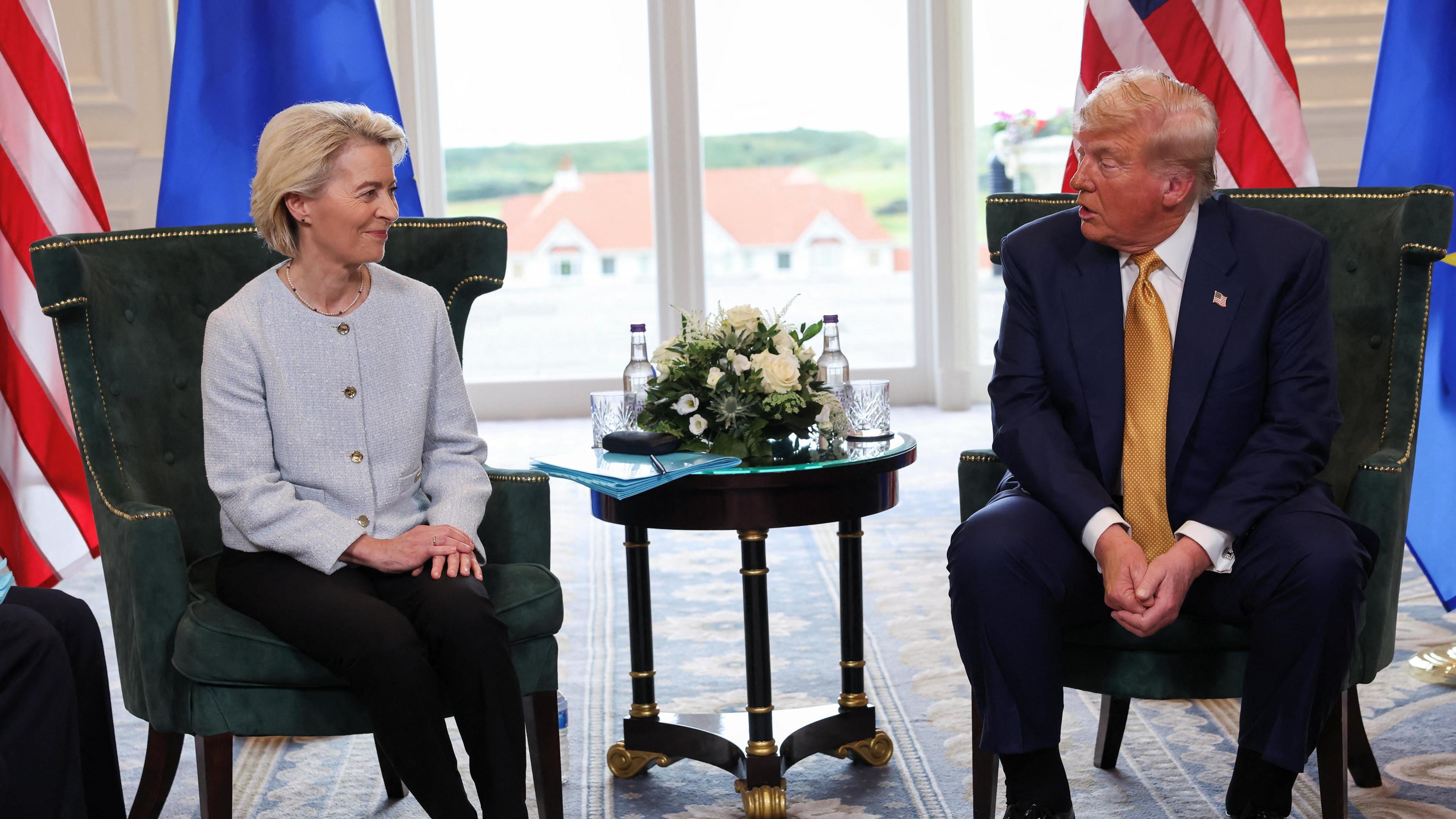
When former U.S. President Donald Trump brokered a trade understanding with the European Union, reactions across Europe were mixed. In Ireland, the reception was particularly reserved. Far from celebrating the deal, Irish leaders and stakeholders expressed a blend of cautious skepticism and concern over its potential consequences, particularly for key sectors like agriculture and technology that are deeply tied to transatlantic trade.
While the announcement of the trade agreement was framed by the Trump administration as a breakthrough in reducing economic tensions between the U.S. and the EU, many Irish policymakers viewed it through a more critical lens. From their perspective, the agreement offered few tangible benefits for Ireland while raising questions about its long-term impact on the balance of trade and regulatory sovereignty.
Agriculture continues to be a crucial part of Ireland’s economy, largely relying on exports to the EU and global markets such as the United States. Any changes in trade policies that affect the competitiveness of Irish food goods are therefore closely examined. The agreement from the Trump era, which involved some reduction in tariffs on specific U.S. agricultural exports to the EU, caused concern among Irish agricultural organizations.
Farmers in Ireland were worried that even slight expansions in the entry of American agricultural products to the European market might lower prices and endanger the competitiveness of locally made commodities. Additionally, there was apprehension about the potential for regulatory differences. American farming techniques, particularly in relation to genetically modified crops and the use of specific growth hormones, vary considerably from European norms. Irish parties were anxious that reducing trade limits might result in pressure for regulatory concessions—something Ireland has steadfastly opposed.
Another factor behind Ireland’s subdued reaction was the belief that the trade pact provided more direct benefits to exporters from the U.S. than to companies in Europe. Although the agreement was praised by the Trump administration as advantageous for both sides, Irish trade analysts observed that the conditions were more favorable to American products in areas where the U.S. had long pursued increased market entry.
Ireland, which is a strong proponent of open trade and has benefited significantly from the EU’s collective trade agreements, questioned whether this bilateral gesture between Washington and Brussels would meaningfully support Irish economic interests. Many pointed out that the agreement focused on reducing specific tariffs and quotas rather than addressing broader trade barriers or creating new opportunities for Irish companies.
Ireland’s position as a key center for international tech companies, especially American giants such as Google, Facebook (Meta), and Apple, made the trade agreement’s effects on digital regulation particularly significant. Although the deal didn’t greatly change digital trade rules, it sparked renewed debates in Ireland about data protection, business taxes, and the influence of U.S. corporations within the Irish market.
Irish authorities have frequently played a key role in implementing the EU’s digital privacy regulations, particularly as numerous leading tech companies have set up their European bases in Dublin. Any commercial deal seen to weaken Europe’s robust data protection policies, like the General Data Protection Regulation (GDPR), was expected to face rigorous examination in Ireland. While the agreement from the Trump administration did not explicitly contest these rules, the general trend of the U.S. administration towards easing regulations caused worry among Irish leaders about the possibility of future demands to relax enforcement.
Ireland’s cautious response to the trade deal also reflected broader political dynamics. The Trump administration’s approach to diplomacy and trade often conflicted with the multilateral principles Ireland traditionally supports. Irish leaders were wary of endorsing a deal negotiated with little transparency and outside the framework of established World Trade Organization (WTO) processes.
Additionally, when the agreement was made, the persistent tensions linked to Brexit had already increased Ireland’s sensitivity towards changes in international trade. Any U.S.-EU agreement that did not consider Ireland’s distinct situation—particularly concerning Northern Ireland and cross-border commerce—was expected to be received with caution rather than excitement.
Ireland attached significant importance to the integrity of EU negotiations as a collective entity. A U.S. bilateral announcement, presented as a substantial diplomatic milestone, threatened to weaken the EU’s cohesive trade strategy. This is a strategy that Ireland has consistently backed, considering its position as a smaller member state that gains from the strength of collective negotiations.
Although the deal was not rejected outright by Ireland, it was received with a tone of guarded observation rather than approval. Irish officials emphasized the importance of ongoing dialogue and the need to ensure that any trade developments uphold high standards in environmental protection, food safety, digital privacy, and fair competition.
Subsequent administrations in both the U.S. and EU have continued to refine the transatlantic trade relationship, focusing on rebuilding trust and addressing areas that the Trump-era deal left ambiguous or unresolved. For Ireland, this has meant reinforcing its role as a key player in EU negotiations and continuing to advocate for policies that balance openness with strategic regulation.
In summary, although the trade agreement with the EU facilitated by Trump was presented as a diplomatic success, Ireland’s response highlighted the intricacies of contemporary global trade. For Irish authorities and industrial associations, the focus is not on immediate gains or political appearances, but rather on enduring strategies that safeguard national interests, are consistent with European principles, and ensure long-term stability in international commerce.