

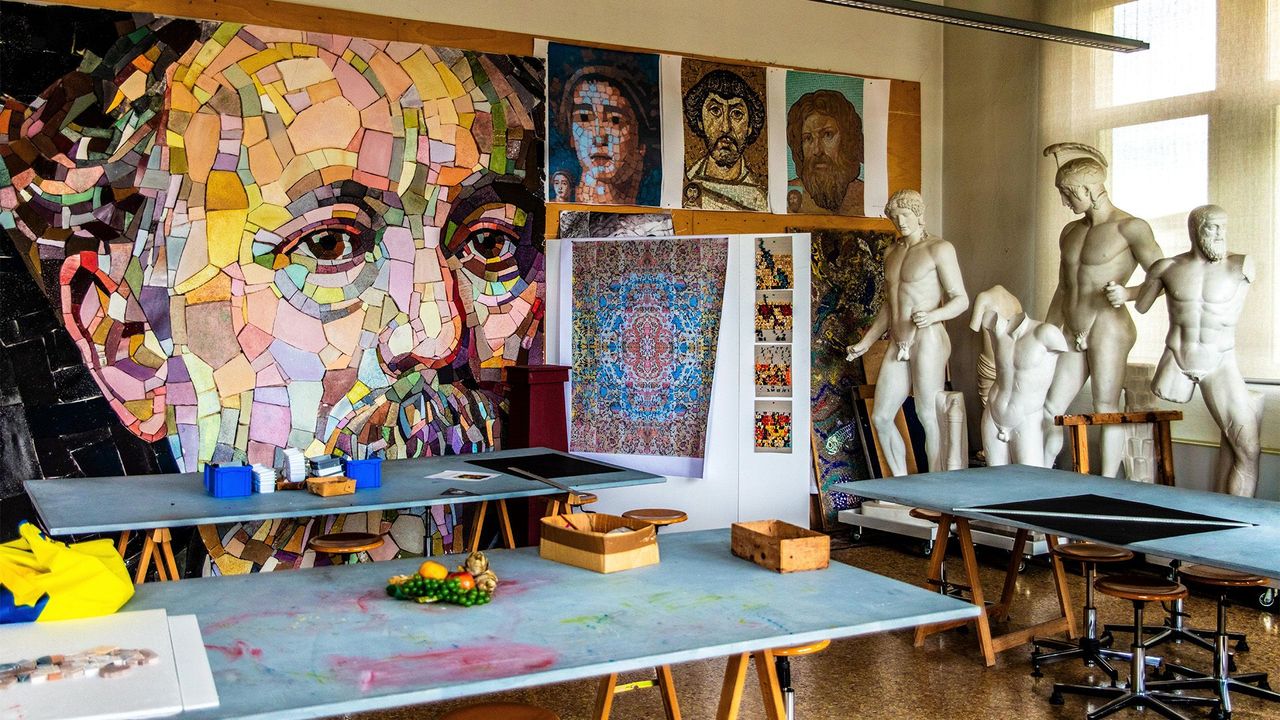
Nestled in the northeastern part of Italy, within the region of Friuli Venezia Giulia, exists a craft that has been preserved over centuries in a dedicated school focused entirely on the complex art of creating mosaics. Although Italy is famous globally for its impact on art, architecture, and design, this unique school—largely unfamiliar to those outside specialized groups—stands as a testament to a tradition originating from ancient Rome and Byzantium.
The Scuola Mosaicisti del Friuli, located in Spilimbergo, has been educating expert mosaic artists since the start of the 20th century. While Italy is frequently associated with Renaissance artwork, marble carvings, and magnificent churches, the precise art of mosaics occupies a special niche in the nation’s rich artistic tradition. This modest yet esteemed school is among the last institutions where the craft is imparted in its most authentic manner, maintaining age-old methods handed through the ages while evolving with modern artistic trends.
For those unfamiliar with the art form, mosaics involve the careful placement of small pieces of colored glass, stone, ceramic, or other materials—known as tesserae—to create elaborate images and patterns. The process demands immense patience, precision, and a deep understanding of composition, color, and material properties. The result is a medium that is not only visually striking but also extraordinarily durable, capable of withstanding centuries of wear.
The students who enroll in the school come from various parts of Italy and the world, drawn by a shared passion for this intricate craft. Their education spans several years, during which they study not only the technical aspects of mosaic creation but also art history, design, and material science. From large-scale architectural installations to fine art pieces, the versatility of mosaics is explored through hands-on learning under the guidance of seasoned instructors.
Walking through the school’s workshops reveals a vibrant mix of tradition and innovation. Ancient Roman and Byzantine motifs sit alongside modern abstract designs. The sound of hammers gently tapping tesserae into place echoes through the studios as students painstakingly arrange each tiny fragment. It is an environment where the past and present coexist, where age-old skills are being kept alive and reimagined for contemporary audiences.
The importance of this craft extends beyond aesthetic value. Mosaics have historically served religious, political, and social purposes. From the floors of Roman villas to the golden walls of Byzantine churches, mosaics have been used to convey stories, glorify religious narratives, and demonstrate wealth and power. The school’s mission is not only to preserve the technical skills required to create mosaics but also to impart an understanding of their cultural significance.
In our rapidly advancing digital world, the intentional slowness of creating mosaics might appear outdated. However, this is exactly what attracts numerous enthusiasts to this craft. The tactile aspect of the process—the texture of stones, the light reflecting off glass, the creation of a cohesive image from separate pieces—provides a contemplative escape from the fleeting aspects of contemporary existence. For learners and creators, making mosaics is equally about self-discipline and contemplation as it is about creating visual art.
The endurance of these time-honored arts is not without obstacles. In recent years, public knowledge of mosaic art has waned, and financial support for expert craft education has been impacted by wider educational changes. Nevertheless, the institution’s standing and excellence in teaching still draw students and project requests globally. From restoring churches to creating public artworks, alumni of the Scuola Mosaicisti del Friuli engage in projects that underscore the lasting significance of their skill.
Over the past few years, there has been a significant revival of enthusiasm for crafted artistic works and traditional skills. This revived admiration for physical, lasting art forms has once again highlighted mosaics, attracting attention not only in Italy but worldwide. Designers, architects, and art enthusiasts are increasingly turning to mosaics to provide texture, dimension, and historical context to modern environments. The institution has been central to this revival, working alongside modern artists and engaging in exhibitions that demonstrate the adaptability of mosaic craftsmanship.
The task of assembling a mosaic is inherently detailed and requires significant time. Each fragment needs to be sliced, molded, and positioned with precision. Artists must organize their designs ahead of time, yet stay open to adapting to the spontaneous changes presented by natural materials. This blend of preparation and spontaneity turns mosaic crafting into an art form that marries technical proficiency with imaginative instinct.
The techniques taught at the school encompass both traditional direct methods—where tesserae are laid face-up directly onto the final surface—and indirect methods, where pieces are assembled in reverse on temporary surfaces before being transferred. Students learn to work with a variety of materials, from smalti (hand-cut glass pieces) to marble, ceramics, and even recycled or unconventional materials. The inclusion of modern materials reflects the school’s commitment to evolving the art form while remaining grounded in its historical roots.
Preserving cultural heritage is an important part of the school’s mission. Italy, which boasts some of the world’s renowned mosaics, has the constant challenge of maintaining and restoring ancient creations. The skills honed at the Scuola Mosaicisti del Friuli are frequently needed for the restoration of heritage sites, making sure that historical mosaics remain valued by future generations.
The city of Spilimbergo has wholeheartedly taken on the responsibility of safeguarding this historic art form. Public areas, exhibitions, and even regular streets are adorned with mosaic art, forming an atmosphere where art is effortlessly integrated into everyday living. Those who travel to the area can observe the crafting of new artworks as well as the conservation of parts that narrate stories from bygone eras.
For the students who enter the school’s doors, the experience is life-changing. The path from beginner to expert in mosaic art requires patience, skill, and commitment. Numerous students eventually set up their own studios, engage in esteemed restoration ventures, or partner with global artists and architects. The abilities learned are not easily duplicated by machines or through mass manufacturing, ensuring each mosaic remains a distinct and enduring addition to the art world.
The enduring appeal of mosaic art lies in its universality and adaptability. While rooted in ancient traditions, mosaics continue to evolve, finding expression in modern design, architecture, and contemporary art. The Scuola Mosaicisti del Friuli, by preserving and advancing this heritage, plays an essential role in ensuring that the art of mosaics remains alive and relevant in the 21st century.