

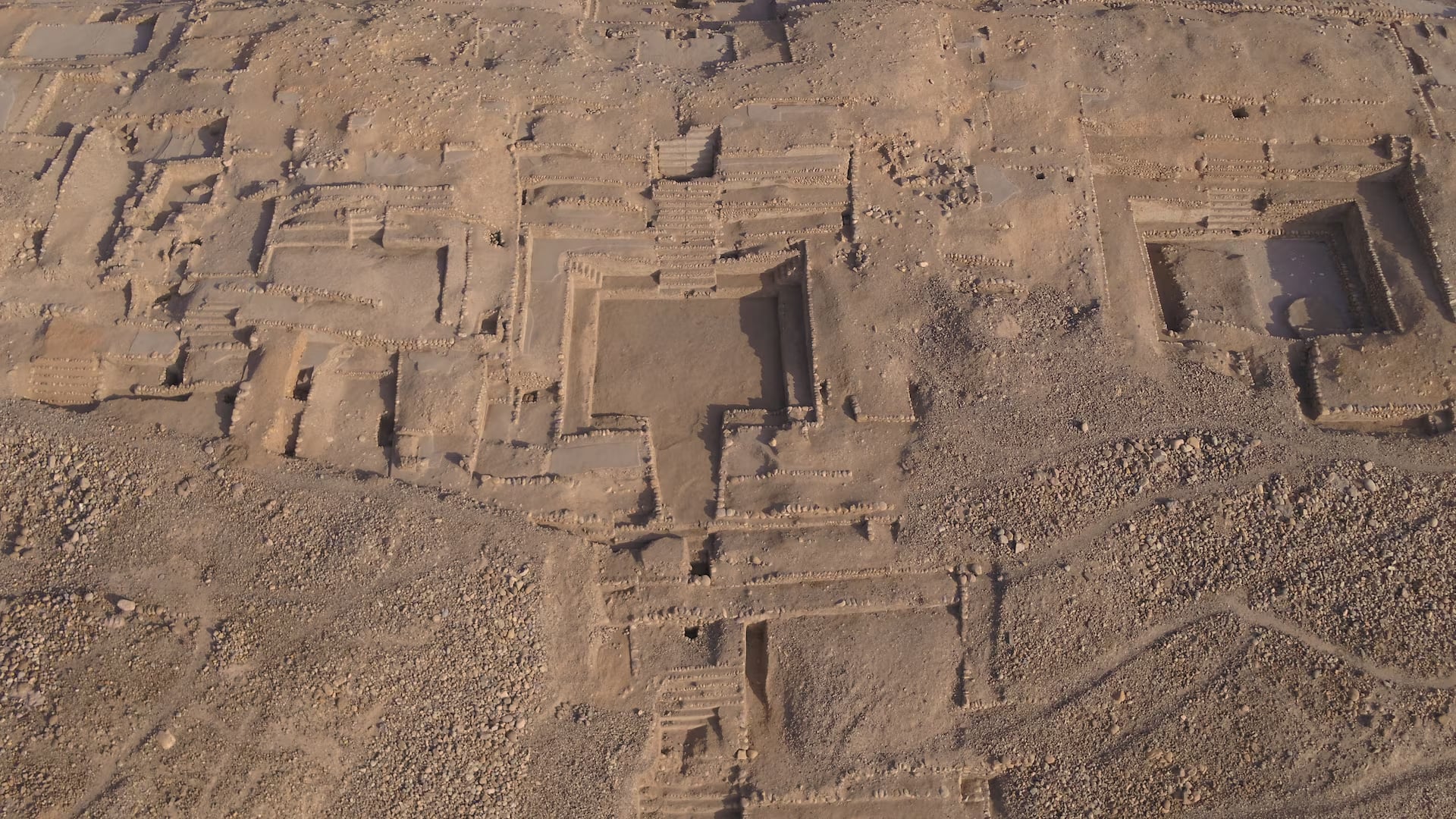
A team of archaeologists in Peru has brought to light the remains of a 3,500-year-old city, offering new insights into the region’s pre-Columbian history and shedding light on early urban development in the Americas. This extraordinary discovery, located in the coastal desert region of northern Peru, is being hailed as one of the most significant archaeological finds in recent decades.
The old settlement, revealed after many years of meticulous digging, offers significant proof of intricate societal structures, architectural advancements, and ritualistic practices originating from a time preceding the emergence of more renowned Andean cultures, like the Moche or Inca. The location is thought to pertain to the ancient Casma–Sechin culture, among the initial communities in South America recognized for its grandiose architecture and elaborate ceremonial complexes.
Archaeologists leading the project describe the discovery as a window into the early formation of urban centers in the Americas, comparable in significance to ancient settlements in Mesopotamia, Egypt, or the Indus Valley. The newly unearthed city reveals the intricate planning and societal structure of a people whose history has long remained hidden beneath layers of sand and time.
The city is distinguished by its impressive attributes such as large stone walls, ceremonial squares, elevated platforms, and living areas, all built using materials from the area. The design illustrates that the settlement served as a political and economic center, in addition to being a hub for spiritual and cultural functions. The architecture showcases a degree of planning and organization, indicating a central governing body and a coordinated workforce.
The importance of this finding lies in the proof of early city development. The existence of broad streets, water management channels, and strategically placed structures reveals that the residents possessed advanced techniques for handling both their surroundings and the social interactions of urban living. This level of intricacy questions prior beliefs that extensive city formation in the Americas happened solely with later societies.
The location also encompasses many ceremonial edifices embellished with elaborate engravings, featuring illustrations of gods, animals, and geometric motifs. These artistic features imply that spirituality was a key aspect of the society, potentially acting as the philosophical bond uniting the populace. Researchers have additionally discovered an assortment of ritual offerings, such as ceramics, lithic implements, and food remnants, which offer further insights into the everyday life and sacred practices of the city’s inhabitants.
Radiocarbon tests on artifacts from the location have verified that the community dates back about 3,500 years, situating it in the Late Preceramic or Initial Period of Andean history. This period is marked by the rise of stationary farming communities that started to construct monumental buildings and intricate social systems. The dimensions and structure of the city imply it housed a population of thousands, making it one of the first known instances of extensive urban habitation in the Americas.
El hallazgo no solo es importante por su antigüedad y dimensión, sino también por la comprensión que ofrece sobre el desarrollo de las primeras civilizaciones en una región que a menudo es eclipsada por las más famosas culturas de los altos Andes. La cultura Casma–Sechin, que prosperó en la costa norte de Perú, es menos conocida a nivel internacional pero ha sido reconocida durante mucho tiempo por los arqueólogos debido a sus monumentales construcciones de piedra y su enigmática iconografía.
The site is located in a region that has been subject to extensive archaeological research over the years, but the sheer scale and preservation of this newly uncovered city set it apart. Many of the structures remain remarkably intact, protected for millennia beneath layers of desert sand. This preservation has allowed researchers to study the original layout and architectural features in exceptional detail.
Archaeologists are thrilled about the possibility of gaining further insight into the everyday lives of the city’s residents. Initial digs have uncovered living quarters, storerooms, and signs of food production, with remains of grown crops like corn, beans, and squash. Animal remains indicate the consumption of both farm animals and sea resources, reflecting a varied and flexible diet.
The finding has also sparked fresh inquiries regarding the connection between various early societies along the Peruvian coastline. Scientists are currently investigating how this historic city might have connected with other nearby communities, either through commerce, conflict, or the exchange of cultural practices. The location could provide significant insights into the dynamics that prompted the rise of intricate societies in ancient South America.
Local government bodies and heritage institutions are collaborating with archaeologists to safeguard and conserve the site. Considering the site’s potential for tourism and educational purposes, conversations have begun on how to manage public access while ensuring preservation. The government of Peru has shown firm backing for the current research, acknowledging the discovery as a significant component of the nation’s rich cultural heritage.
The team leading the excavation includes experts from Peruvian universities as well as international collaborators specializing in archaeology, anthropology, and conservation science. Their multidisciplinary approach combines traditional excavation techniques with modern technologies such as 3D scanning, drone mapping, and geophysical surveys. These tools are helping researchers create detailed models of the site while minimizing disturbance to fragile structures.
While the excavation project progresses, the researchers aim to gather additional insights into the social and political structure of the ancient city. Preliminary discoveries indicate that the community might have been hierarchically organized, with affluent individuals residing in grander, more intricate homes near ceremonial hubs, whereas ordinary citizens inhabited simpler houses on the outskirts. Signs of specialized craftwork, such as pottery and textile production, suggest a varied economy that provided for both artisans and agricultural workers.
The spiritual practices in the city attract significant attention. It is thought that the ceremonial squares and large platforms were used for public ceremonies, celebrations, and perhaps observing stars. Certain buildings seem to be oriented towards celestial occurrences, emphasizing the significance of seasonal rhythms in the farming calendar and the community’s religious customs.
One of the key challenges facing archaeologists is interpreting the symbolic meanings of the site’s carvings and artistic motifs. The iconography includes both human and animal figures, some of which may represent mythological beings or ancestors. Understanding these symbols could provide valuable insight into the belief systems and worldview of this ancient culture.
This discovery has drawn comparisons to other early urban centers in Peru, such as Caral, another monumental pre-Columbian site located further south. While each settlement has unique features, together they demonstrate that complex societies were flourishing in the Americas long before the rise of the Inca Empire. These findings are prompting scholars to rethink the timelines and trajectories of early civilization in the region.
The international archaeological community has welcomed the discovery, noting that it contributes to a growing body of evidence that the Americas were home to some of the world’s earliest and most innovative urban societies. The uncovering of the 3,500-year-old city serves as a powerful reminder that human ingenuity and social organization have deep roots in every corner of the globe.
With fresh levels of excavation revealing more about this ancient city, archaeologists aim to solve long-standing mysteries concerning the organization of early societies in South America, their adaptations to difficult environments, and how they established the groundwork for later civilizations. Every artifact, structure, and symbol discovered provides researchers with valuable insights into the complex mosaic of human history that took place on the Peruvian coast thousands of years in the past.
The work is far from complete, and researchers anticipate that further excavations could take years, if not decades. Yet the initial findings already offer a remarkable glimpse into a world long forgotten, reminding us that the past still holds countless stories waiting to be discovered beneath the earth.