

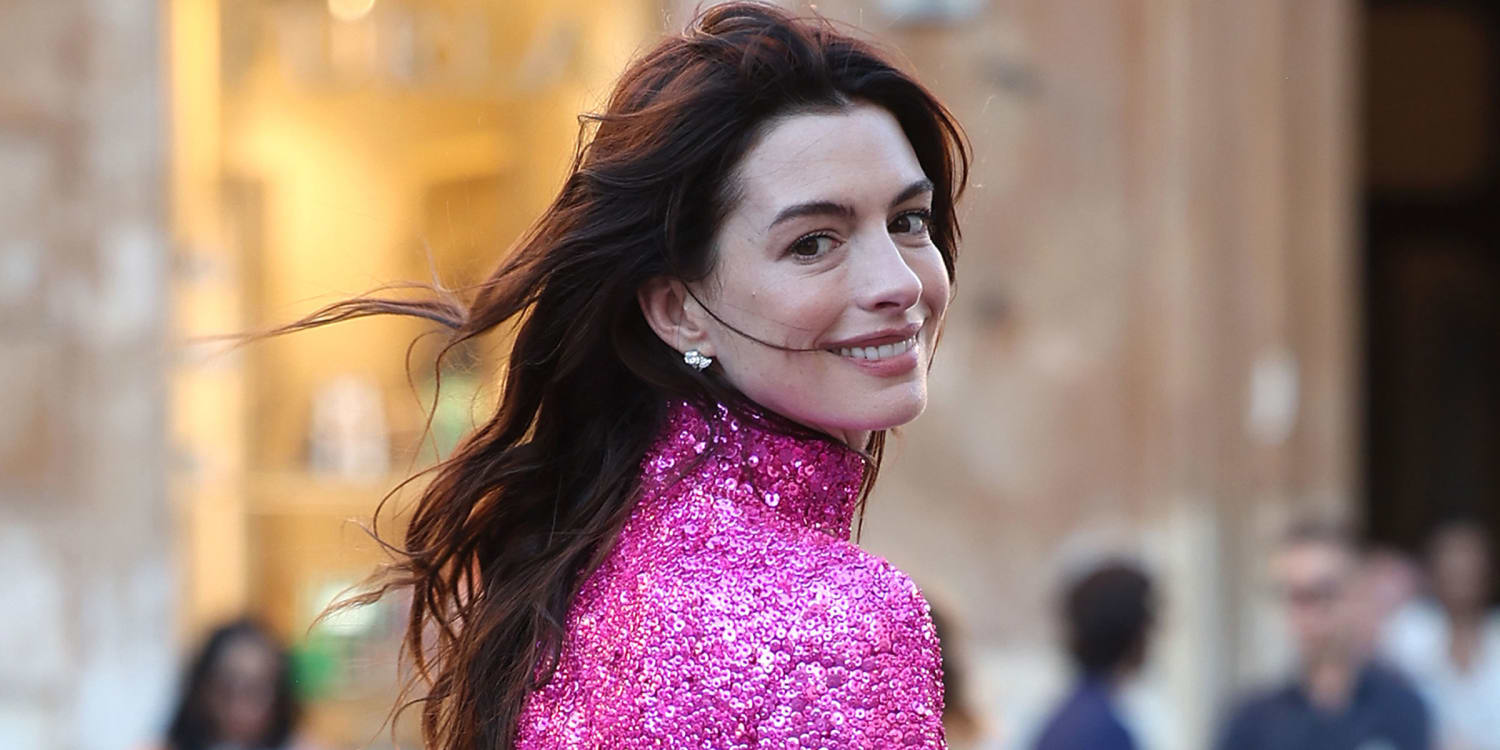
Over time, Anne Hathaway has established herself as an influential figure not only in cinema but also in the fashion industry, with many memorable appearances featured in Vogue magazine. Celebrated for her ageless beauty, adaptability as an actress, and dynamic fashion choices, Hathaway’s connection with Vogue has provided admirers with insights into her personal experiences, significant career achievements, and constantly shifting fashion tastes.
From her early days as a rising Hollywood star to her current status as a seasoned actress and style icon, Hathaway’s appearances in Vogue reflect the shifts in both her career and her image. Each feature has captured a different chapter of her life, blending high fashion with candid insights into the person behind the fame.
A prominent feature about Hathaway appeared in Vogue in the mid-2000s, a time when her career was rapidly ascending after the premieres of The Princess Diaries and The Devil Wears Prada. The latter film, especially, not only entrenched her status in Hollywood but also opened doors to the realm of high-end fashion—a bond that would deepen in the ensuing years. Vogue’s articles then depicted Hathaway as the epitome of the contemporary woman: smart, captivating, and naturally fashionable.
In the early interviews, Hathaway candidly shared her early unease with the fashion scene. Even though she was part of one of the most legendary fashion movies, she revealed feeling like she didn’t quite belong in the realm of designer attire and fashion spectacles. Vogue emphasized her ability to connect with the audience, portraying her as a person who, despite her elegance, remained humble and accessible.
As Hathaway’s professional journey advanced, her features in Vogue began to portray a more refined and self-assured individual. The 2008 appearance, coinciding with the launch of Rachel Getting Married, highlighted not only a change in her acting selections but also a profound inquiry into her private life. The images depicted Hathaway in graceful, subtle attire, indicating a move away from the playful fashion linked to her previous roles. The accompanying article explored her perspectives on stardom, connections, and the difficulties of managing a life in the public eye—topics that resonated with the audience.
During the 2010s, Hathaway’s connection with fashion became increasingly prominent, with Vogue serving as a crucial outlet for showcasing her changing sense of style. A notably unforgettable feature took place alongside her performance as Catwoman in The Dark Knight Rises. The editorial was daring, avant-garde, and transformative, with Hathaway adopting streamlined forms and a more shadowy visual style. This change highlighted both her adaptability as an actress and her skill to revamp her image—an important quality in the constantly shifting realm of celebrity fashion.
Beyond the clothing, Hathaway’s interviews during this era revealed a growing confidence and willingness to discuss topics such as body image, mental health, and the pressures of Hollywood. Her honesty endeared her to fans and critics alike, adding layers of depth to the polished images that accompanied each feature. Vogue, in turn, presented her not merely as a fashion muse but as a thoughtful, articulate woman unafraid to challenge expectations.
Another significant moment in Hathaway’s Vogue history came with her 2013 Oscars win for Les Misérables. The coverage following her Academy Award triumph captured Hathaway at a professional and personal high point. The styling leaned toward classic Hollywood glamour, with an emphasis on tailored gowns, luxurious fabrics, and timeless beauty. Yet the accompanying narratives touched on the vulnerability she experienced in the public eye, particularly as she navigated intense media scrutiny during that period.
Hathaway’s ability to persevere became a prominent topic in her subsequent Vogue features. Following a period away from the public scene to prioritize her private life and expanding family, she re-emerged with revitalized enthusiasm and outlook. Articles from Vogue in this time frequently highlighted equilibrium—between professional life and parenting, public image and personal identity, drive and genuineness.
Her discussions started to bring attention to larger topics like the empowerment of women, gender equality in show business, and the significance of utilizing one’s influence for impactful change. These dialogues mirrored Hathaway’s own growth and the evolving cultural scenery. Vogue, famous for its skill in combining fashion with social awareness, offered the ideal setting for these insights.
In recent features, Hathaway has adopted a more adventurous and experimental fashion style. She has been spotted in avant-garde outfits, bright hues, and striking silhouettes that showcase a woman completely comfortable in her own skin. The styling decisions in these photo sessions not only mirror the latest trends but also highlight Hathaway’s readiness to take chances and assert her uniqueness—an element that has become pivotal to her lasting charm.
The actress has openly discussed her experiences with getting older in Hollywood, a sector frequently criticized for how it deals with women past 40. During interviews, she has conveyed her thankfulness for the ongoing opportunities she receives while promoting broader representation and inclusivity throughout the entertainment field. These intricate discussions have lifted her Vogue features above simple fashion displays, making them venues for significant conversation.
Anne Hathaway’s ability to remain relevant in both fashion and film over two decades speaks to her adaptability and authenticity. Her appearances in Vogue have chronicled this journey, offering snapshots of a woman who has grown from ingénue to Oscar-winner, from reluctant fashion participant to style icon. Each feature reveals a different facet of her personality, allowing readers to witness her evolution in both subtle and striking ways.
As Hathaway continues to take on new roles, both on-screen and off, it is likely that her relationship with Vogue will evolve further. The magazine has not only documented her changing style but has also provided a lens through which the public can understand her career, her challenges, and her triumphs. In an industry where reinvention is often necessary for longevity, Hathaway’s story serves as a testament to the power of authenticity and resilience.
Fashion, ultimately, is not solely about garments—it embodies self-expression, change, and narrative. Hathaway’s Vogue appearances embody this reality. Whether showcased in sophisticated couture or bold modern styles, she has continually leveraged fashion as a means to mirror her personal development and to connect with wider cultural dialogues. Through this, she has sustained her status as both pertinent and esteemed, motivating audiences well beyond the cinematic world.
Looking ahead, Hathaway’s impact on both fashion and film seems poised to continue. With new projects, public advocacy, and an ever-evolving sense of style, she remains a compelling figure in both industries. As Vogue undoubtedly captures future chapters of her journey, readers can expect more than just stunning photography—they can expect insight into the heart and mind of an artist unafraid to evolve, to challenge herself, and to speak her truth.
Anne Hathaway’s most memorable Vogue moments are not solely defined by the clothes she wears but by the stories she shares and the authenticity she brings to every page.