

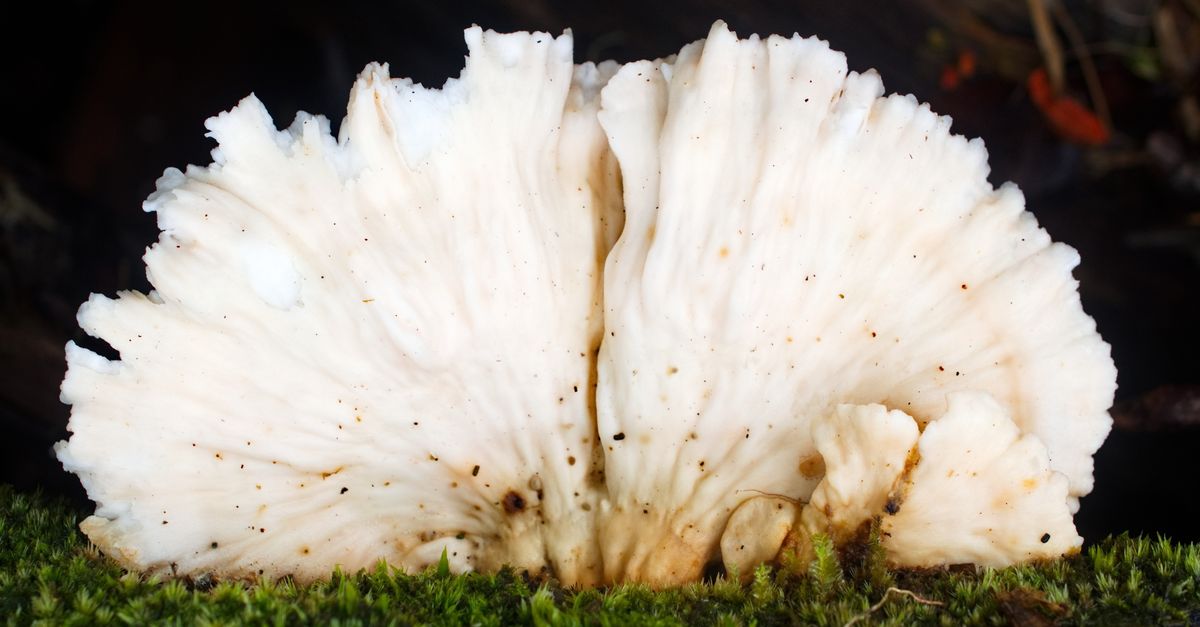
As the dinosaurs disappeared around 66 million years ago, other forms of life adapted to a changing planet. A giant fungus recently identified in China is offering scientists new insights into fungal evolution and the remarkable biodiversity that remains undiscovered.
A newly identified fungus found in the forests of Yunnan province in southwestern China is attracting scientific attention because of its extraordinary size and evolutionary history. Named Dianjunus rex, the species produces upright reproductive structures that can reach approximately 20 inches (50 centimeters) in height and weigh nearly 5 pounds (2.2 kilograms).
Its name draws a comparison with Tyrannosaurus rex, the famous dinosaur often described as the king of prehistoric predators. Although the two organisms are vastly different, the name reflects the fungus’s remarkable stature among its relatives. Rather than ruling ancient ecosystems through predation, D. rex represents an unusual branch of fungal diversity whose evolutionary history may be connected to the environmental changes that followed one of Earth’s largest mass extinction events.
On September 28, the results appeared in the academic journal Frontiers in Fungal Biology. Aside from presenting a previously undocumented species, the study uncovers a brand-new family of fungi, providing insights into the evolutionary paths and environmental adaptations of these organisms.
A fungus that stands out for its size
One of the most striking characteristics of Dianjunus rex involves the dimensions of its fruiting bodies, which are referred to as stromata. Rising vertically, these reproductive organs display a fleshy texture alongside extended projections that bear a striking resemblance to grouped fingers.
Upon first appearing, the stromata exhibit a pale yellow hue. As the fungus develops, this coloration slowly deepens. Ultimately, these formations can attain a height of roughly 20 inches, an exceptionally large size for specimens within their specific taxonomic classification.
The finding holds special importance as D. rex falls under the phylum Ascomycota, representing one of the fungal kingdom’s most expansive lineages. This particular grouping encompasses entities as diverse as truffles, morels, and yeasts, besides countless microscopic or infrequently spotted wild species.
Before the discovery of D. rex, one of the largest known members of this group was Engleromyces goetzei, a bulky brown fungus found in Kenya. Its fruiting body can reach nearly 12 inches (30 centimeters) in diameter and weigh approximately 7 pounds (3.2 kilograms).
However, D. rex is distinguished by the impressive height of its reproductive structures alongside their unique growth patterns. Numerous closely related fungi barely reach a height of a few inches, whereas others are so diminutive that proper examination demands specialized laboratory instruments.
Kabir Peay, a professor of biology and Earth system science at Stanford University, emphasized the importance of discovering fungi with such unusual characteristics. He noted that spectacular specimens help researchers appreciate the extraordinary range of fungal forms that science has yet to document.
How the extinction of the dinosaurs may have influenced fungal evolution
Another significant focus of the research involves the evolutionary roots of Dianjunaceae, the recently classified family comprising Dianjunus rex. Through genetic material analysis and cross-referencing the fungus with kindred organisms, researchers calculated that this family originated roughly one million years subsequent to the asteroid strike that concluded the Cretaceous Period.
Approximately 66 million years ago, that cataclysmic event sparked a mass extinction capable of wiping out all non-avian dinosaurs alongside roughly 75% of the planet’s flora and fauna.
The environmental consequences were profound. Reduced sunlight disrupted photosynthesis, while large quantities of dead leaves, wood, roots and animal remains accumulated across affected ecosystems. These changes disrupted food webs and made survival difficult for many organisms.
Yet the surplus of dead organic matter could have additionally generated prospects for decomposers. Fungi are crucial in decomposing dead flora and fauna, recycling nutrients back into the habitat and sustaining the ongoing operation of ecosystems.
Indunil Senanayake, an associate professor at the Kunming Institute of Botany in China who also coauthored the research, pointed out that such settings could have favored specific fungal lineages. Even though the exact connection linking the mass extinction event to the rise of Dianjunaceae calls for additional study, the discovery demonstrates how significant ecological crises are capable of shaping the evolutionary trajectory and proliferation of life.
A local observation led to a scientific discovery
Researchers identified Dianjunus rex during fungal diversity surveys conducted in the forests of Yunnan province in 2024 and 2025. However, local residents had noticed the unusual organism before scientists began investigating it.
Farmers in the area had encountered clusters of fleshy, fingerlike structures growing around a dead tree. Despite its unusual appearance, the fungus had not previously attracted significant scientific attention.
Everything shifted once a community member posted pictures of the creature online. Those photos motivated the experts to dig deeper, inspect physical samples, and run genetic tests to determine the exact species and its phylogenetic connections.
Senanayake reported that some local people had even tasted the fungus without experiencing noticeable adverse effects. However, the researchers have not conducted sufficient toxicity testing to establish whether it is safe to eat. The absence of reported symptoms should therefore not be interpreted as evidence that the species is edible.
This finding has additionally sparked inquiries concerning the reasons behind the substantial growth of reproductive organs in D. rex. Typically, ascomycetes refrain from generating massive stromata, a tendency likely linked to the substantial metabolic cost required for their construction and upkeep.
One possibility is that the fungus’s height offers a reproductive advantage. Its upper structures contain thousands of tiny pores through which spores are released. In the forest environments where the species grows, the ground is often covered with fibrous plant material that could interfere with the movement of spores.
By raising its reproductive structures above the forest floor, D. rex may increase the likelihood that its spores travel farther and reach suitable locations for growth. Researchers will need to conduct additional studies to determine whether this explanation accounts for its unusual size or whether other biological and environmental factors are involved.
Why scientists still have so much to learn about fungi
The recognition of Dianjunus rex underscores a notable blind spot within scientific understanding. While experts have officially cataloged roughly 150,000 types of fungi, certain projections indicate that a staggering two million to 13 million distinct varieties could actually populate the globe.
The difference between these figures indicates that a substantial portion of fungal biodiversity remains undocumented. Many species inhabit difficult-to-reach environments, while others are challenging to identify because their visible structures appear only under specific conditions.
The vast majority of any fungus is composed of tiny, thread-shaped filaments known as hyphae. Collectively, they create a web called the mycelium, which generally develops beneath the ground, within rotting timber, or amid plant matter. Those reproductive forms that individuals identify as mushrooms, along with other visible fungal manifestations, merely constitute a fraction of the living entity.
These structures may emerge when environmental conditions are favorable or during particular stages of the fungus’s life cycle. As a result, even a large and distinctive species such as D. rex can remain unnoticed for years.
Stanford’s Peay stressed that documenting fungal species is an essential first step toward understanding their ecological roles. Scientists must first establish which organisms exist before they can investigate how those species interact with plants, animals and their surroundings.
Fungi contribute to the carbon cycle, break down organic matter and support the growth and nutrition of many plants. Understanding their diversity is therefore important not only for taxonomy and evolutionary biology but also for broader research into ecosystem health.
Ultimately, Dianjunus rex stands for far more than just a remarkably massive fungus. Its discovery offers a chance to explore fungal evolution, understand why specific species grow extraordinary physical traits, and see how shifts in the environment mold biodiversity across millions of years. Furthermore, it acts as a gentle reminder that, even within environments studied for decades, nature retains the capacity to unveil organisms that broaden our comprehension of existence on Earth.