

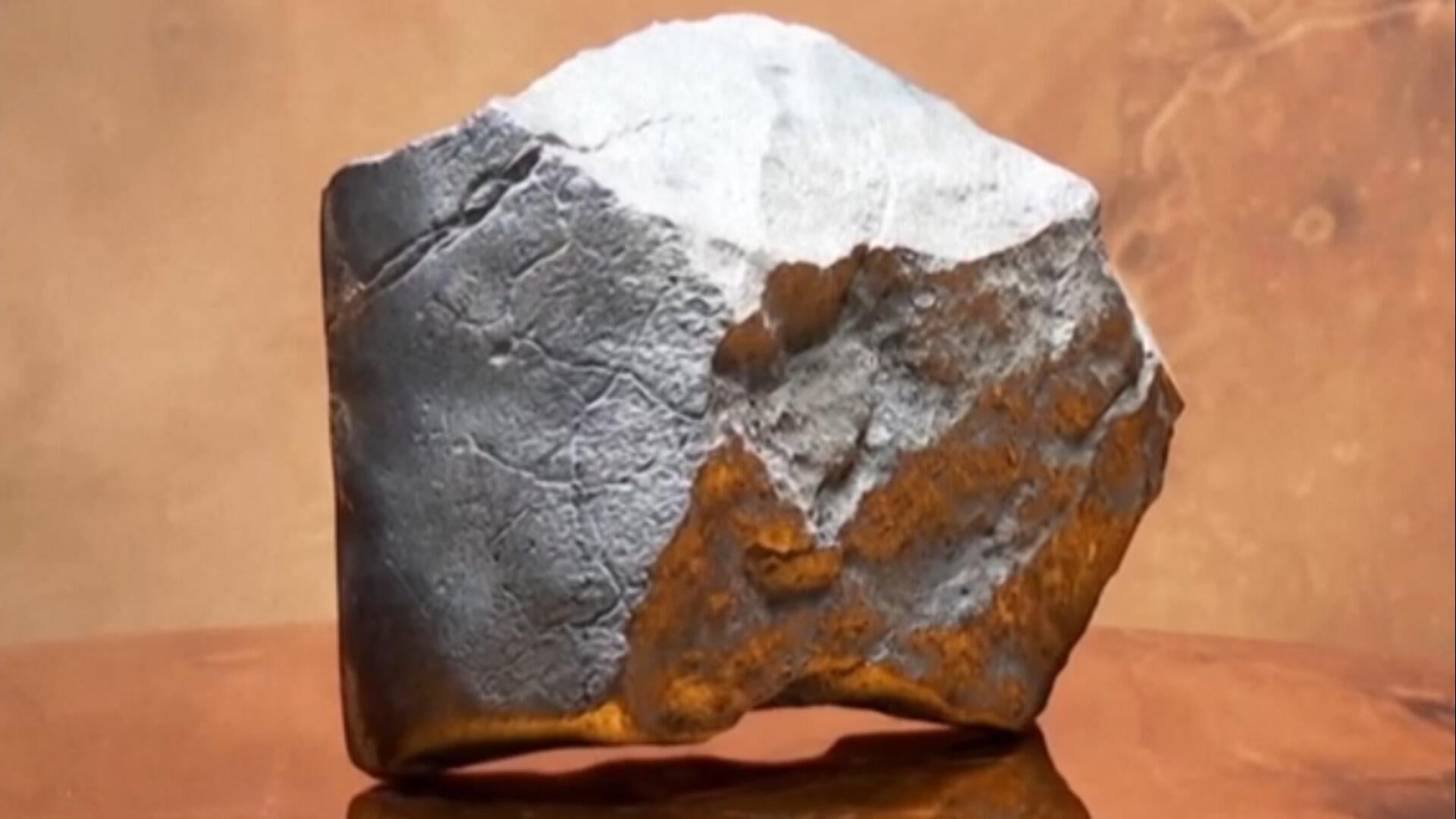
In the dry stretches of the Sahara Desert, a significant geological discovery once captivated the world—a large piece of Mars, blasted off the Red Planet’s surface by a forceful cosmic event and ultimately arriving on Earth. Heavier than the majority of meteorites and possessing immense scientific worth, the piece was celebrated as the biggest Martian rock ever found on our planet. Its path from an isolated area in Niger to the global market, however, is currently under a prominent investigation.
Niger’s authorities have initiated an official investigation into the $5 million transaction involving this remarkable meteorite, bringing up concerns about ownership rights, export guidelines, and the moral obligations related to the trading of space material. For a country that is rich in geological resources yet faces economic difficulties, the situation highlights critical matters of national heritage, resource governance, and the expanding global market for unique celestial artifacts.
The rock, officially classified as a Martian meteorite based on its chemical composition and isotopic signatures, is believed to have arrived on Earth thousands—if not millions—of years ago. It was discovered in a sparsely inhabited region of Niger, where meteorite hunters, local nomads, and international collectors sometimes cross paths in pursuit of valuable space rocks. Such meteorites can fetch enormous sums on the private market, with prices influenced by size, rarity, scientific importance, and aesthetic appeal.
Based on various accounts, the transaction being discussed involved an individual purchasing the item for $5 million, which is an unmatched amount in the trade of meteorites. Although the purchaser’s identity is undisclosed, this sale has surfaced several issues in Niger regarding the legality of the rock’s export, the dealer’s authorization to sell it, and if such an object ought to be considered private property or part of the nation’s cultural and scientific heritage.
Meteorites, although they are not traditional mineral assets, fall into a legal gray area. Certain countries have clear regulations for their gathering and export, considering them national treasures meant for museums or research centers. Alternatively, some countries allow individuals to own them if discovered on their property. In Niger, while there are laws to safeguard natural heritage, enforcement has often been irregular, particularly in distant desert areas where governmental influence is limited.
The ongoing research aims to establish the precise journey of the Martian rock—from its initial discovery within Niger’s borders to its ultimate purchase overseas. Officials are assessing if export permissions were issued, if the rock was illegally transported without valid paperwork, and if intermediaries took advantage of legal gaps to introduce it into the profitable global meteorite market.
Este análisis surge en medio de debates más amplios sobre la ética de comercializar objetos de enorme valor científico. Los investigadores destacan que los meteoritos, especialmente aquellos provenientes de Marte, son más que simples artículos de colección. Contienen datos insustituibles sobre la historia planetaria, los procesos geológicos y la posibilidad de vida antigua más allá de la Tierra. Cuando estos ejemplares se incorporan a colecciones privadas, el acceso para estudios científicos puede volverse limitado, lo que potencialmente retrasa u obstruye descubrimientos que podrían beneficiar a la humanidad en su conjunto.
For Niger, the issue is also one of national pride and sovereignty. In recent years, the country has faced challenges over the exploitation of its mineral wealth, from uranium to gold. The loss of a rare extraterrestrial treasure without adequate compensation or oversight has fueled public calls for stronger protections over the nation’s natural and scientific assets. Some voices within Niger’s academic community are urging the government to establish a formal meteorite registry, invest in training for local geologists, and create agreements with international researchers to ensure future finds remain accessible for study.
The $5 million tag related to this transaction has intensified conflicts. Whereas those passionate about meteorites perceive these prices as indicative of market interest, skeptics consider them a sign of an uncontrolled market that lets a handful benefit greatly from what could be seen as shared assets. The international meteorite marketplace, featuring auctions across Europe, the United States, and the Middle East, frequently operates under the radar, with numerous deals taking place privately among collectors.
Curiously, the interest in Martian meteorites goes beyond pure scientific interest. Their appeal is strongly linked to the enduring human intrigue with Mars—a planet that has fueled numerous myths, books, and space missions over time. Acquiring a piece of Mars is more than just owning something rare; it is about having a physical link to another celestial body, a part of the universe’s history that existed before humans. This combination of romantic allure, scientific interest, and exclusivity motivates collectors to spend significant amounts, adding complexity to the ethical and legal discussions.
In response to the ongoing investigation, some international institutions have expressed interest in acquiring the rock for public display, should Niger reclaim it. Museums with planetary science departments argue that such a specimen should be housed in a facility where it can be studied and appreciated by the public, rather than locked away in a private collection. Others suggest that even if the rock remains in private hands, agreements could be made to loan it periodically to researchers or exhibitions.
The case has also led to talks on the necessity for more robust international oversight regarding the sale of meteorites, akin to treaties that safeguard cultural treasures and threatened animals. Proponents of these rules claim that meteorites—particularly those with significant scientific value—ought to be viewed as part of the collective inheritance of humanity, with distinct rules on the manner in which they may be marketed, researched, and shown. Critics argue that overly strict regulation might inhibit exploration, deter private funding, and drive the market underground.
In the meantime, the investigation in Niger continues, with authorities reportedly tracking down witnesses, reviewing export records, and consulting international experts. While the outcome is uncertain, the case has already served as a stark reminder that space rocks are more than just curiosities. They are pieces of other worlds, carrying within them the secrets of the solar system’s past—and perhaps clues to life’s origins.
Whether the $5 million Martian rock will be returned to Niger, remain in private hands, or end up in a public institution remains to be seen. What is clear, however, is that its journey from the Martian surface to a Saharan desert and into the heart of a legal and ethical debate underscores a truth that transcends borders: our planet is not the only one with a story to tell, and the fragments that fall to Earth are part of a much larger narrative—one that belongs to all of us.